Artūrs Analts (1991) is a young designer who, after graduating from Riga Design and Art High School, went to study product design at Central Saint Martins College of Design and Art in London. He gained media attention and professional recognition with his final work, a metal staircase Led Zeppelin, developed in Riga. Later, he successfully participated in various international and local design competitions.
Interview with designer Artūrs Analts
Artūrs Analts believes that he grew up and developed as a professional designer in London. In 2013, Artūrs Analts founded the interdisciplinary design studio “Variant Studio” together with Rūdolfs Strēls.
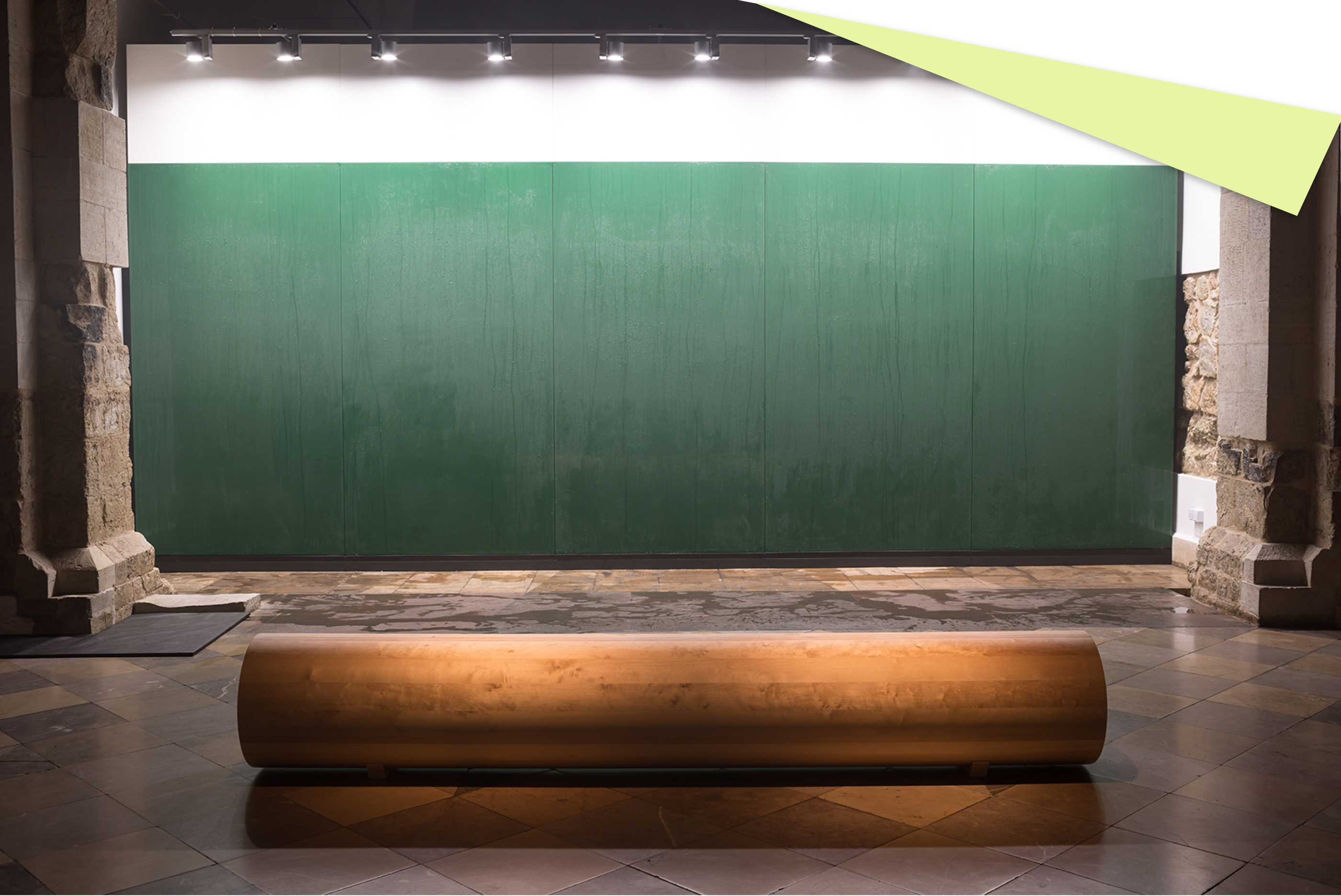
“I sleep little and work a lot,” says designer Artūrs Analts. The exhibition Matter to Matter, created by him, will represent Latvia in September at the London Design Biennale. Green-tinted glass panels that slowly dew. On the condensation-covered surface, every visitor can write their message with their finger, just like on a sweaty window glass, and watch as it slowly flows out and fades to make room for new inscriptions. So ethereal and meditative is the proposal by designer Artūrs Analts for the Latvian exhibition Matter to Matter, which will be on display at the second London Design Biennale. It will take place at Somerset House from September 4 to 23. Four dozen countries will participate in the biennale. The exhibition Matter to Matter is one of the events of the international program of Latvia’s centenary. The installation created by Artūrs Analts will use natural materials (wood, water) and reflect the role of nature in Latvian culture and everyday life.
You had a very successful final work when you graduated from Riga Design and Art High School – a metal staircase for Led Zeppelin. Wasn’t it difficult to outdo yourself later?
I haven’t tried to outdo myself, but I’ve been afraid that I might run out of ideas for new design solutions at some point. Now I’m calmer because I’m aware of how I work, how I come up with an idea and a solution.
You don’t hide that you are ambitious.
I would say that I am energetic. I sleep little and work a lot. I am charged by the process of creating design itself – work meetings, discussions about design and searching for solutions. Every designer has his own work rhythm. I work quickly, but that doesn’t mean sloppy.
In the past, designers often claimed that their dream was to create works that would be mass-produced and used by millions of people, and that their names might not even be on the packaging of these items. It seems that such dreams are no longer typical of your generation.
I really don’t dream of creating mass-produced objects. Nowadays, we have to think twice about whether something needs to be produced in millions. The trend of our time is to create so-called craft products – to produce high quality and small quantities for the local community from local materials, using local traditions.
There is usually a contradiction in such a business model – if you want to make money, you have to make the local product internationally competitive and understandable.
I think the problem is that we don’t buy our own products.
Do you purchase the works of Latvian colleagues?
Yes, I buy not only local designs, but also new Latvian art, because I want to support my friends. Of course, our choice is determined by purchasing power, but I think we wouldn’t buy local design even if we were richer. We don’t believe in Latvian design, and foreign brands still seem more prestigious to us.
Isn’t the problem also the fact that Latvian designers are launching products that are not fully developed?
Of course. I think that in general, most Latvian design is in the prototype and experimental stage. Young designers create their diploma project and then try to sell it right away. Some of these things work and are successful. It’s difficult to talk about industrial design in Latvia. We work here as craftsmen who make things ourselves, and they can only be sold in design galleries. They are usually pretty objects that are not very functional and often don’t have a particularly original idea, but our designers have a good sense of style. In general, we like pretty things.
Is beauty essential in modern design?
Unusual aesthetic designs are interesting to look at during design weeks, but not to use in everyday life. In everyday life, we want beautiful and comfortable design.
You have said about the dewy wall in the Latvian exhibition at the London Design Biennale that it is not only a design object, but also a work of art. There has always been a tense relationship between art and design.
Because designers create overly decorative works that claim the status of art. I try to avoid that and work more in the direction of conceptualism. I am also the author of the Bank of Latvia’s collector coin, the Honey Coin. It is an interesting interdisciplinary project that asks the question of whether a collector coin is a work of art or a design object. I think it can claim the status of a work of art.